
Authors: Yash Shukla, Rajan Rawal, Pamela Fennell, Steve Evans, Tej Chavda, Sammit Pancholi
Achieving India's Nationally Determined Contribution of reducing carbon emissions to 35%
of 2005 values while ensuring safe and dignified housing and clean energy for all is an
unprecedented challenge of global significance. A detailed understanding of the Indian
building stock is a critical prerequisite to addressing this challenge
Authors: Rajan Rawal, Sameer Maithel, Yash Shukla, Sonal Kumar, Greesha Gowri, Jayamin Patel, Satyendra Rana, Vishnu Vardhan
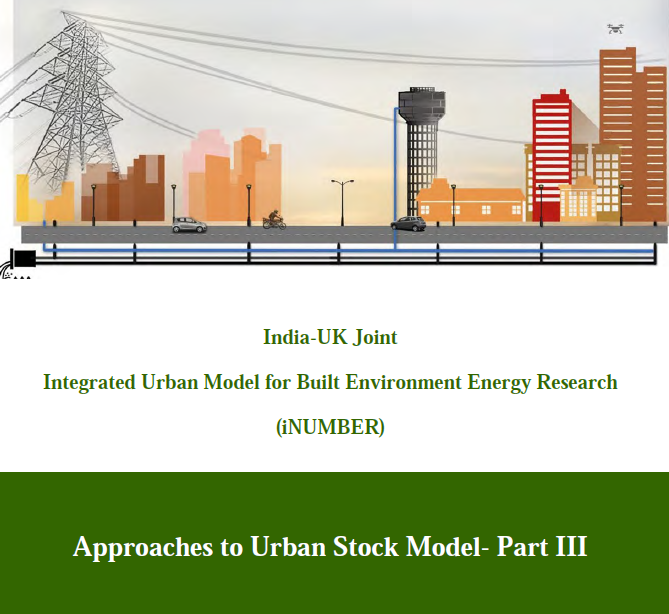
Authors: Tej Chavda, Sammit Pancholi, Kartikay Sharma, Rajan Rawal, Paul Ruyssevelt, Pamela Fennell
The report further includes the methodology to develop a 3D geometrical model for a pilot study area and its outcome, challenges faced, and lesson learned.
+
Developing Cost-Effective and Low-Carbon Options to Meet India’s Space Cooling Demand in Urban Residential Buildings Through 2050

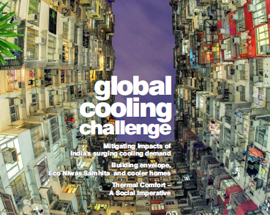
Global Cooling Challenge, Published in SEEM’s Energy Manager Magazine, Jan-Mar 2020
Authors: Archana Walia, Vida Rozite, Dr. Sukumar Devotta, Saswati Chetia, Sameer Maithel, Ankit Kalanki, Iain Campbell, Funder-Kristensen T, Leinweber D, Vishnu Vardhan
+
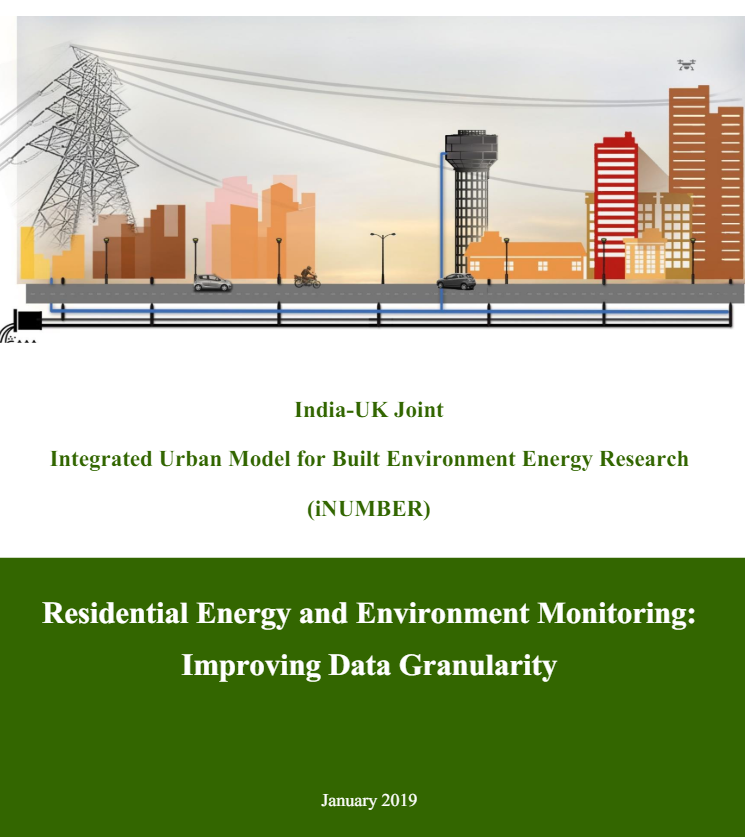
India-UK Joint Integrated Urban Model for Built Environment Energy Research (iNUMBER), January 2019
Authors: Rajan Rawal, Himani Pandya, Tithi Soladhara, Paul Ruyssevelt, Kathryn Janda, Pamela Fennell
+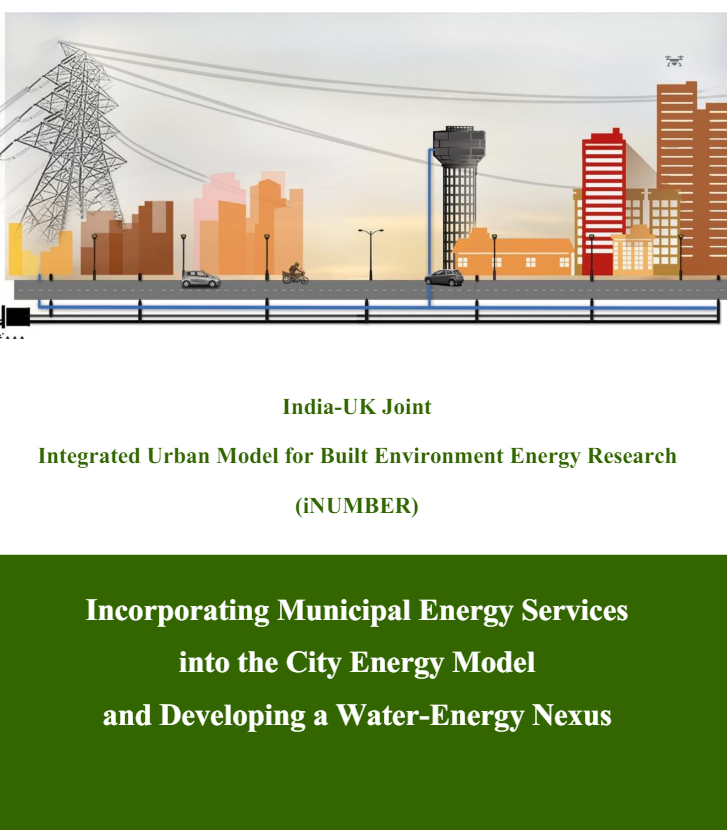
India-UK Joint Integrated Urban Model for Built Environment Energy Research (iNUMBER), January 2019
Authors: Mona Iyer, Rajan Rawal, Sachin S, Himani Pandya, Asha Joshi and Kathryn Janda
+
India-UK Joint Integrated Urban Model for Built Environment Energy Research (iNUMBER), January 2019
Authors: Rajan Rawal, Veeren Poola, Kartikay Sharma, Paul Ruyssevelt, Pamela Fennell
+
India-UK Joint Integrated Urban Model for Built Environment Energy Research (iNUMBER), January 2019
Authors: Rajan Rawal, Himani Pandya, Tithi Soladhara, Paul Ruyssevelt, Kathryn Janda, Pamela Fennell
+
India-UK Joint Integrated Urban Model for Built Environment Energy Research (iNUMBER), January 2019
Authors: Mona Iyer, Rajan Rawal, Sachin S, Himani Pandya, Asha Joshi and Kathryn Janda
+
India-UK Joint Integrated Urban Model for Built Environment Energy Research (iNUMBER), January 2019
Authors: Rajan Rawal, Himani Pandya, Tithi Soladhara, Paul Ruyssevelt, Kathryn Janda and Pamela Fennell
+

Published in The Magazine of HVAC&R Technology and Applications ASHRAE.ORG, Sept2026
The article examines limitations in conventional vapor-compression room air conditioners, particularly their inefficient dehumidification in warm-humid climates. Field and laboratory studies in India demonstrate that super-efficient AC prototypes can reduce overcooling, improve humidity control, lower energy consumption and peak demand, and maintain thermal comfort, highlighting the need for improved standards and controls.
For original article, please login.

Published in NDTV news, 08Jul2026 Rapid urbanization drives 60% of warming in Indian cities through the "Urban Heat Island" effect, trapping daytime heat in concrete, asphalt, and glass. Mitigating this escalating hazard requires a critical shift toward climate-responsive design—utilizing passive cooling, reflective materials, and micro-forests to naturally lower temperatures and build climate-resilient cities. For original article, please click here.

Published in Hindustan Times, 06Jul2026
Indian cities face a severe, compound climate threat: dangerously high humidity combined with surging nighttime heat. Trapped moisture from ocean warming, exacerbated by the urban heat island effect, prevents standard passive and natural cooling. Addressing this public health hazard requires targeted Heat Action Plans featuring advanced, multi-seasonal, and active cooling strategies.
For original article, please click here.
Published in The Times of India, 26Jun2026
Ahmedabad is enduring an extraordinary climate crisis, recording temperatures above 40°C on 71 of 76 days since March. Climate experts warn that early-onset extreme heat, combined with rising humidity and warmer nights, prevents vital physiological recovery. This prolonged heat stress poses a critical, long-term challenge to public health.
For original article, please click here.

Published in The Tribune, 24Jun2026
The article challenges conventional indoor cooling practices by advocating thermal comfort approaches that align with human adaptation rather than fixed temperature settings. It highlights the role of adaptive comfort, occupant behaviour, and climate-responsive building design in reducing energy demand while maintaining healthy, comfortable, and sustainable indoor environments.
For original article, please click here.

Published in Hindustan Times, 01Jun2026
The article reflects on the enduring relevance of modernist architecture, emphasizing that buildings are more than physical structures—they shape human experience, social interaction, and quality of life. It advocates context-sensitive, climate-responsive design that balances functionality, sustainability, and cultural identity to create resilient and people-centric built environments.
For original article, please click here.
Published in Bhaskar English, May 2026
The article highlights Ahmedabad’s unusually early and intense summer heat, with temperatures reaching 35°C in February, signalling changing seasonal patterns and increasing climate risks. It underscores the need for climate-responsive urban planning, heat-resilient buildings, and evidence-based adaptation strategies to protect public health and strengthen resilience against rising temperatures.
For original article, please click here.

This case study demonstrates how simulation-driven facade design can significantly improve indoor thermal comfort while reducing building energy demand. Using advanced modelling tools in DesignBuilder , the study evaluates how design parameters such as glazing, shading devices, orientation, insulation, and thermal mass influence occupant comfort and building performance. Through an iterative optimisation process, the project identifies facade strategies that balance daylight, solar heat gain, and ventilation to create more climate-responsive buildings. The analysis highlights the importance of passive design interventions, particularly external shading and appropriate glazing selection, in minimizing overheating and improving indoor comfort conditions without excessive reliance on mechanical cooling. By integrating performance simulation into early-stage design decision-making, the study showcases how architects and engineers can develop energy-efficient and occupant-centric buildings using data-driven methods.

This case study explores how integrated HVAC optimisation and renewable energy design can dramatically improve the energy performance and resilience of buildings in remote or energy-constrained locations. Using advanced simulation workflows in DesignBuilder, researchers evaluated different HVAC configurations for the Bundanon Art Gallery in Australia, comparing an existing ground-source heat pump system with an optimised hybrid solution combining VRF, VAV, and water-cooled chillers. The study demonstrates how system-level integration can reduce inefficiencies often hidden in conventional HVAC designs while maintaining strict indoor environmental conditions required for sensitive spaces such as galleries and museums. The optimised design achieved substantial reductions in annual energy use and HVAC electricity demand, while also supporting the transition toward near off-grid energy operation through renewable energy integration. By combining performance simulation, energy systems thinking, and climate-responsive design strategies, the project highlights how buildings can simultaneously achieve occupant comfort, operational efficiency, and long-term sustainability in a low-carbon future.

Published in ET Edge Insights, 28Mar2026
The article highlights the need for scientifically robust urban heat monitoring to better understand and address heat risks across Indian cities. It advocates standardized measurement frameworks, localized data collection, and evidence-based planning to guide heat mitigation strategies, strengthen climate resilience, and protect vulnerable communities from the growing impacts of extreme urban heat.
For original article, please click here.
Published in Deccan Herald, 24Mar2026
The article highlights indoor air quality as an emerging public health challenge, emphasizing that people spend most of their time indoors where pollutants can significantly affect health, cognition, and productivity. It advocates integrating ventilation, air quality monitoring, and climate-responsive building design to create healthier, more resilient indoor environments.
For original article, please click here.
Published in The Economic Times, 13Mar2026
The article highlights the potential of next-generation super-efficient air conditioners to reduce energy consumption by up to 60% while improving thermal comfort and lowering peak electricity demand. It emphasizes collaboration among industry, researchers, and policymakers to accelerate sustainable cooling solutions that support India's energy security, climate goals, and growing cooling needs.
For original article, please click here.
Available on YouTube, 22Dec2025
The video traces CEPT University’s evolution from a school of architecture to a multidisciplinary institution dedicated to the built environment. It also features Prof. Rajan Rawal discussing research, international collaboration through the IEA EBC Programme, and the significance of hosting the 2025 EBC meeting in Ahmedabad, advancing sustainable building science.
For original video, please click here.
The study investigates the influence of indigenous tree species on indoor latent cooling loads in Ahmedabad, India, having a hot and dry climate. Focusing on ten mature tree species, and its phenological characteristics the impact on the indoor latent cooling load is analysed for a defined volumetric space under steady-state conditions. The analysis is based on nine representative conditions derived from the Indian Model for Adaptive Comfort (IMAC) for air-conditioned spaces, considering average dry bulb temperature and relative humidity.


Published in Times of India, 09Jun2024
Ahmedabad is facing a severe surge in heat-related emergencies, hitting a decade-high 132% year-on-year increase. Research reveals that elevated nighttime temperatures (above 26°C) combined with high population density in concrete built environments dramatically compound heat stress. This lack of nocturnal cooling poses a critical health threat to vulnerable populations.
For original article, please click here.
Authors: Himani Pandya, Kartikay Sharma, Sachin S., Tithi Soladhara
Published in GRIHA Annual magazine Shashwat, Volume 5, Issue 6, December 2019
This article elaborates on various tools that can aid cities in planning the provision of sustainable energy and water services to citizens.
Published in The Guardian, 05Dec2023
The article explores how rising temperatures are making air conditioning an essential adaptation for millions of Indians, while exposing inequalities in access to cooling. It emphasizes the urgent need for climate-responsive buildings, energy-efficient cooling technologies, and sustainable urban planning to meet growing cooling demand without exacerbating climate and energy challenges.
For original article, please click here.


Published in The Times of India, 11May2022
A study led by Rajan Rawal at CARBSE (CEPT University) uses a sophisticated heated mannequin to examine the relationship between room temperatures, building envelopes, and skin temperatures across 16 body regions. The research provides critical insights into body thermal regulation to help design climate-resilient buildings.
For original article, please login.
Published in The Times of India, 04Apr2022
The article highlights Ahmedabad’s pioneering 3D energy mapping initiative, which uses advanced geospatial technologies and AI to assess building-level energy consumption across the city. The project aims to support evidence-based urban planning, improve building energy efficiency, reduce greenhouse gas emissions, and inform climate-responsive policies for sustainable urban development.
For original article, please click here.

Published in The Times of India, 30Mar2022
The article highlights the establishment of a state-of-the-art thermal comfort laboratory to advance research on how temperature, humidity, air movement, clothing, and human physiology influence indoor comfort. The facility supports evidence-based strategies for energy-efficient cooling, climate-responsive building design, and improved resilience to rising temperatures.
For original article, please click here.
Published in The Times of India, 30Mar2022
The article reports findings demonstrating that combining ceiling fans with air conditioning can maintain thermal comfort while reducing energy consumption and electricity costs. The study reinforces the value of mixed-mode cooling strategies, highlighting how simple interventions can improve cooling efficiency, lower emissions, and support sustainable building operations in warm climates.
For original article, please click here.

Published in The Guardian, 29Aug2019
The article explores the global rise in air-conditioning use and its contribution to increasing energy demand and greenhouse gas emissions. It underscores the need for sustainable cooling through climate-responsive building design, energy-efficient technologies, and passive strategies to ensure thermal comfort while reducing environmental impacts in a warming world.
For original article, please click here.
Published in Fountainink.in, 12Jul2019
The article examines the unintended consequences of India's growing dependence on air conditioners, highlighting their contribution to rising energy demand, urban heat, and greenhouse gas emissions. It advocates climate-responsive buildings, passive cooling strategies, and sustainable thermal comfort solutions that reduce reliance on energy-intensive cooling while addressing increasing heat risks.
For original article, please click here.

Published in The Verge, 14Sept2017
As India faces rising temperatures and growing cooling demand, researchers and designers are developing affordable, energy-efficient cooling solutions tailored to local climates. The article highlights how innovations in building design, passive cooling, and next-generation air-conditioning technologies can improve thermal comfort while reducing energy consumption and mitigating climate change impacts.
For original article, please click here.
Published in INSITE, Sept 2017
This study by Mihir Vakharia explores the thermal performance of central courtyards (chowks) in Ahmedabad’s historic Pol houses. It highlights how traditional architectural elements—such as central open-air courtyards, smart spatial organization, and attic buffers—regulate indoor temperatures and enhance natural ventilation, offering valuable insights into sustainable, climate-responsive design.
For original article, please login.
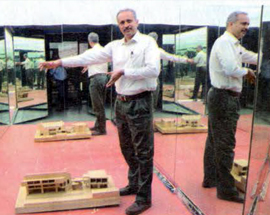
Published in Chitralekha, 20Jul2015
CEPT University's Centre for Advanced Research in Building Science and Energy (CARBSE) utilizes cutting-edge tools like an artificial mirror box to optimize natural lighting and reduce electricity use in buildings. Led by Prof. Rajan Rawal, the center provides research-driven insights to architects and policymakers, promoting eco-friendly building designs.
For original article, please login.
Published in Indian Architect & Builder, Jan 2015
This study investigates deep daylighting strategies for modern commercial office spaces in New Delhi. By evaluating light shelves, vertical light tubes, and anidolic ducts, researchers compared daylight penetration and ROI. Light shelves emerged as the most cost-effective retrofit, delivering uniform illumination while minimizing glare.
For original article, please login.
Published in Indian Architect & Builder, Dec 2014
This study evaluates the architectural and daylight performance of traditional Indian stone jaalis. Analyzing historical mosques across Ahmedabad, researchers simulated various stone thicknesses and solid-void ratios. Findings reveal that traditional thick jaalis optimize natural illuminance, reduce glare, and enhance thermal comfort, offering valuable strategies for modern sustainable building design.
For original article, please login.

Published in Indian Architect & Builder, Nov 2014
This article examines the cooling benefits of urban trees in Gandhinagar’s central business district, demonstrating how strategically placed vegetation can reduce ambient temperatures and improve outdoor thermal comfort. The findings highlight the importance of integrating urban greenery into city planning to enhance climate resilience, energy efficiency, and the livability of rapidly urbanizing environments.
For original article, please login.

Author: Melissa Smith
Published in Air Conditioning and Refrigeration Journal
Vol. 17- No. 6 – November – December 2014

Published in Indian Architect & Builder, Oct 2014
This article explores the role of courtyards in improving the thermal performance of contemporary commercial buildings. Using simulation-based research, it evaluates how courtyard geometry, orientation, and building form influence energy efficiency, demonstrating how traditional passive design principles can inform climate-responsive architecture and sustainable urban development.
For original article, please login.
Published in Indian Architect & Builder, Oct 2014
This article investigates the summer thermal performance of Ahmedabad’s traditional pol houses through detailed field measurements and building analysis. The findings demonstrate how vernacular design features enhance indoor comfort under hot climatic conditions, offering valuable insights for climate-responsive architecture and the integration of passive cooling strategies into contemporary building design.
For original article, please login.

Author: Melissa Smith
Published in Air Conditioning and Refrigeration Journal
Vol. 17- No.5 – September – October 2014
Development Team: Prof. Rajan Rawal, Bhavya Pathak, Prof. Yash Shukla, Dr. Shailesh Kr. Agrawal, Manish Kumar, Consultant, S Vikash Ranjan, Govinda Somani, Prof. Rashmin Damle, Palak Patel
Graphics and layout by: Mona Galsar, CRDF, CEPT University, Dalip Kumar
Authors: Malcolm Cook, Yash Shukla, Rajan Rawal, Dennis Loveday, Luciano Caruggi de Faria, Charalampos Angelopoulos
With contributions from: Sanyogita Manu, Deepta Mishra, Jayamin Patel, Aniket Deore, Saranya Anbarasu, Devna Vyas, Sanjeev Kumar
Graphics and layout by: Mona Galsar
Authors: Satish Kumar, Aleisha Khan, Anurag Bajpai, G. S. Rao, Jyotirmay Mathur, Laurie Chamberlain, P. C. Thomas, Rajan Rawal, Ravi Kapoor, Surekha Tetali, Vasudha Lathey, Vishal Garg